Wednesday, November 2, 2011

A Fresh Start

Welcome back to Lakeland Public Library’s book discussion group blog!!

If you’re interested in joining any or all of LPL’s book discussion groups, check out the previous post, How Do I Get a Copy of a Book Club Title? : http://lplbookgroups.blogspot.com/2009/09/how-do-i-get-copy-of-book-club-title.html.

LPL’s Book Discussion Groups on Goodreads

If you can’t make it to our book discussion meetings, try us online at Goodreads:


Free Audiobook and e-Book Downloads

Check out the many downloadable audiobook and e-book titles Lakeland Public Library offers for library card holders: http://www.lakelandgov.net/library/Services/OnlineResources/eBookseAudioeVideo.aspx.

 
LPL also has free e-book downloads for Kindle users with a library card. Instructions on how to download to your Kindle can be found here: http://www.lakelandgov.net/Portals/Library/Downloading%20eBooks%20to%20a%20Kindle%2010-11.pdf.

All library cards are free--if you live within Polk County. If you don’t have a library card, detailed information on how to get your free card can be found on our website: http://www.lakelandgov.net/library/Home/LibraryCards.aspx.

 
Even more websites offer free audiobook and e-book downloads:

If you have no clue about e-books and/or e-readers, Manatee Public Library System offers a cheat sheet on e-books and e-readers:
https://secure.soita.org/docs/eReader%20Overview%2012%2014%202010.pdf.


Happy Reading!!


Tuesday, October 19, 2010

Summer 2010 Recap

I offer apologies for the delay in posting book reviews and summaries. Here’s a recap of the Lakeland Public Library’s book groups summer titles:

BSI April 2010 selection

American Stories by Nagai Kafu

The fictional American Stories, written in 1908, affords us the opportunity to see America, turn of the century America, through other eyes.

How much have we changed? What has stayed the same?

A near contemporary of Natsume Soseki (Soseki’s Heredity of Taste was reviewed in this blog here ), Kafu could be considered a black sheep in Japan’s roster of modern literary greats.
Kafu and his work Yojohan fusuma no shitabari was the subject of several landmark censorship trials in Japan. Another of his works, Rivalry: a Geisha’s Tale , was also closely scrutinized.

An excellent article on Nagai Kafu is found at the Japan Times website in two parts: here and here.


DATE April 2010 selection

Mary, a Novel by Janis Cooke Newman

Swept up. Swept away.

Both terms are appropriate when talking about Mary, a Novel by Janis Cooke Newman . Newman has done an excellent job weaving facts and fiction in this telling of Mary Todd Lincoln’s life.  She re-imagines the love story between Abraham Lincoln and Mary Todd; their married years with births of their beloved and doomed children and the effect of Lincoln’s assassination had on Mary’s behavior.

Mary, a Novel begins with Mary Todd Lincoln’s documented commitment to an insane asylum  for genteel women. Newman lets Mary reveal the circumstances surrounding her commitment. The reader hears of Mary’s childhood and her sorrow over her relationship with her single surviving son, Robert. The novel imparts an understanding and empathy for one of America’s more misunderstood First Ladies.

For more information on history’s Mary Todd Lincoln, try these books: Madness of Mary Lincoln by Jason Emerson,  Mrs. Lincoln and Mrs. Keckly: The Remarkable Story of the Friendship Between a First Lady and a Former Slave by Jennifer Fleischer,  Mary Todd Lincoln: a Biography by Jean Baker,  Mary Todd Lincoln: Her life and Letters by Justin G. Turner,  and The Lincolns: Portrait of a Marriage by Daniel Mark Epstein. 


BSI May 2010

The Far Field by Edie Meidav

The Far Field is a dense exotic read. It follows American Henry Frye Gould, one-time minister, spiritualist, and now Buddhist, bent on creating his own utopian society in 1930’s colonial Ceylon (Sri Lanka). A self-described anti-missionary, Gould is really on a mission to prove himself—to his estranged wife, his son, his guru and ultimately to himself. Yet there is many a slip twixt cup and lip; and Henry’s journey turns out to be even more momentous than he imagines.

Novelist Edie Meidav lived and worked in Sri Lanka as a Peace Corps worker.

DATE May 2010

Fire in the Blood by Irene Nemirovsky

The total history of almost anyone would shock almost everyone.  ~Mignon McLaughlin, The Neurotic's Notebook, 1960

Fire in the Blood is Irene Nemirovsky’s second posthumous novel is a slim book, 138 pages including a Translator’s Note, A Note on the Text and a Preface to the French Edition. However in that small quota of pages, she has packed a compendium of the human heart. Nemirovsky aimed to a novel about the “purity of parents who were guilty when they were young” and how parents are incapable of “understanding that ‘fire in the blood’ that had led to their youthful transgressions”.  She succeeded.

A Fire in the Blood  is set in the insular French village Issy L'Eveque, based on the Burgundy village where Nemirovsky and family fled to from Paris in 1940. The novel follows the lives of Silvio, his sister Helene and her daughter Colette and resounds with knowledge that past always shapes the present and future.

Although Nemirovsky was an established writer during her lifetime, she is currently most known for first posthumous novel, Suite Francaise, which won the 2004 Prix Renaudot.

BSI June 2010

The Catcher in the Rye by J. D. Salinger

Where were you when you first read The Catcher in the Rye? How old were you when you first read The Catcher in the Rye?

The Catcher in the Rye  is a classic for a reason. Salinger does an excellent job embodying how young people think and act currently—even though Catcher was originally published in 1951 and parts of it written as early as 1946. Salinger captures that sense of existential angst we all suffer from at times, especially in adolescence.


DATE June 2010
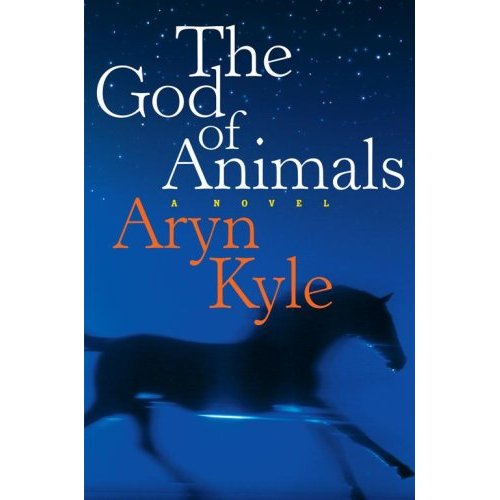
The God of Animals by Aryn Kyle
Aryn Kyle offers a coming of age novel in her first work, The God of Animals. Yet she defies that straight forward description by producing a jewel of a debut novel.

It is summer in Desert Valley, Colorado. Twelve year-old Alice Winston copes with the drowning death of a schoolmate in nightly phone conversations with her English teacher. She spends her days working long hours beside her father Jody on their failing horse farm and struggles to cover the absence of Nona, her newly-eloped 16 year-old sister and their mother who retired to her bedroom shortly after Alice's birth. In the ensuing year, Alice will desperately reinvent herself and shake the long shadows cast by her sister and mother.


BSI July 2010

The Absolutely True Diary of a Part-time Indian by Sherman Alexie

Sherman Alexie has produced a miracle of a semi-autobiographical book. He makes the reader angry, laugh out loud and even cry as you follow Junior’s search for himself and a better life.

The Absolutely True Diary of a Part-time Indian tells the story of Junior, a member of the Spokane tribe. Junior writes–and draws cartoons--about his life in his diary: the difficulties of being poor; the trial of being small and sickly; the alcoholism that dogs his entire tribe and his quest to break out of reservation. It is his yearning for a better life which gets him branded as a part-time Indian. He succeeds in attending a high school outside the reservation, but will he find acceptance outside the rez and be able to recover his belonging inside the rez? Junior lives and tells his tale with much humor.

Both The Absolutely True Diary of a Part-time Indian and Ten Little Indians, another book by Alexie, share the same kind of wry dark humor, spot-on commentary about American society and excellent writing. A reader’s guide for The Absolutely True Diary of a Part-time Indian, which won the 2007 National Book Award for Young Adult Literature , can be found here. Sherman Alexie  is poet, stand-up comedian, novelist, screenwriter, and director.

DATE July 2010

The Photograph by Penelope Lively

Penelope Lively is known for her quiet excellent fiction and The Photograph is no exception. The novel poses the question “How well can you know someone?” and follows it in the wake of an unearthed photograph. Glyn, a landscape historian, discovers a photograph of his deceased wife Kath and an unknown man holding hands while searching through old research notes. Well seasoned in the ways time alters landscapes, Glyn uses his historian skills to excavate the terrain of his marriage.

Multiple mysteries of heart coexist in this novel. Lively reveals them through a deftly written medley of narratives which include Glyn, Kath and Elaine, Kath’s older sister. The Photograph captures “the many ways the past intrudes upon the present and the present alters the past”.

Thursday, April 1, 2010

BSI March 2010 selection


There are two mysteries wending through A Far Country by Daniel Mason; one for the reader and one for Mason’s main character, Isabel.

The reader’s mystery is a straightforward one--where the story takes place. Mason deliberately keeps the location vague--Is it Mexico? Africa? Indonesia?--which can engender conflicting emotions toward the story. One either becomes frustrated with a story boiled down to a miasma of images. Or the story and its characters transcend place and even time--ultimately becoming timeless and current.

For Isabel, Far Country’s main character, the mystery is the disappearance of her beloved brother Isaias. She endures extreme poverty and peril at home as well as in the capital city where she is sent to join her brother and cousin Manuela.

It is in the capital city where the story (and Isabel’s life) slows and changes, swerving off into an unexpected, but not unbelievable, path. Does she find her brother in the wasteland of urban life? Does she find herself and her place in this new world? Only time and the story’s end will tell.

Daniel Mason belongs to the long established trend of doctor-writers.  A few of the more famous and current crop of doctor-writers include:


Ethan Canin
Robin Cook
Michael Crichton
Tess Gerritsen
Khaled Hosseini

Mason's first book, The Piano Tuner, has been made into a play and an opera. It has also been optioned for a movie. His latest work is Death of the Pugilist, or The Famous Battle of Jacob Burke and Blindman McGraw, a book of short stories.  A Far Country was shortlisted for the James Tait Black Memorial Prize for Fiction  in 2007.

Reading group questions for A Far Country can be found here.


Tuesday, March 16, 2010

DATE March 2010 selection

The dream for most writers, fiction or nonfiction, is for their labor of love--their work--to get published in whatever format--print, online, e-book, etc. If somehow that work also gets turned into a movie, whoopie!

Imagine being a writer having both things happen on your first attempt. That’s the fairytale scenario that produced Julie Powell’s book Julie & Julia: 365 Days, 524 Recipes, 1 Tiny Apartment Kitchen (also titled Julie and Julia: My Year of Cooking Dangerously). It began as a blog, The Julie/Julia Project, which still exists online hosted by Salon.

Powell prefaced that blog with the following:

"The Book:
"Mastering the Art of French Cooking". First edition, 1961. Louisette Berthole. Simone Beck. And, of course, Julia Child.  The book that launched a thousand celebrity chefs. Julia Child taught America to cook, and to eat. It’s forty years later. Today we think we live in the world Alice Waters made, but beneath it all is Julia, 90 if she's a day, and no one can touch her.

The Contender:
Government drone by day, renegade foodie by night. Too old for theatre, too young for children, and too bitter for anything else, Julie Powell was looking for a challenge. And in the Julie/Julia project she found it. Risking her marriage, her job, and her cats’ well-being, she has signed on for a deranged assignment.

365 days. 536 recipes. One girl and a crappy outer borough kitchen.

How far will it go? We can only wait. And wait. And wait…..

The Julie/Julia Project. Coming soon to a computer terminal near you."

The blog quite understandably revolves around Julie and her life. She presents a glimpse into her somewhat neurotic inner life and her quest to conquer Mastering the Art of French Cooking--and by extension her own self.

The focus of the book Julie and Julia is expanded to include Paul Child’s letters as chapter openers, which is where the book shines.  The love story of Paul and Julia Child may send you to another couple of books, Appetite for Life by Noel Riley Fitch and My life in France by Julia Child with Alex Prud'homme, for more.

Julie and Julia—the movie version—opens the reader/viewer even more to Julia Child’s life with its struggles and triumphs. Readers and viewers get to know Julia Child before she becomes her iconic self, before Mastering the Art of French Cooking. We briefly meet Child’s co-writers, Louisette Bertholle and Simone Beck. Even Irma S. Rombauer of Joy of Cooking fame makes an appearance.

Julie Powell's current blog, What Could Happen?: Musings from a "soiled and narcissistic whore."  Her new book, Cleaving, explores yet another food related venture, butchering—and more on her life and marriage. She is also working on an unnamed novel.

Discussion questions for Julie and Julia can be found here.


Monday, February 8, 2010

DATE February 2010 selection

"There are no streetcars in Oblivion." reads the first line in Horace Afoot by Frederick Reuss. Horace, an independently wealthy Luddite, chooses on a whim to relocate to the small Midwestern town of Oblivion because of its dearth of streetcars and quite possibly its name.

Horace is in search of “a state of complete detachment” and the Greek ideal of autarkeia (complete autonomy). He is deliberately anonymous.  As the novel unfolds he tries on and discards names and personas of various poets and philosophers: Chidiock Tichborne, William Blake, Quintus Horatius Flaccus, Lucian of Samosata.

In Oblivion he accompanies his name change with a rebirth ritual of sorts; he walks out the back of his rented home and into the woods, disrobes, buries all of his clothing including shoes and returns home naked, reborn.

But for all of Horace’s avoidance behavior, life finds him. Before Horace Afoot ends, Horace is befriended by Mohr, the head librarian who is terminally ill; stalked and harassed by a young thug and reluctantly saves a bound and gagged naked woman he encounters as walks past a cornfield.

Frederick Reuss has said he is fascinated with characters whose lives are in a state of dislocation. He espouses the idea that identity is not a fixed thing--“a given”--but that which we construct on our own from memory. In effect, who we are is what we’ve read or what is found in the prevailing culture.  Reuss uses this central idea in Horace and also in his other novels, The Wasties and Henry of Atlantic City.

Philosophy and poetry wend their way throughout Horace. (Break out the dictionaries, history and philosophy books to better understand Horace.) Reuss, who holds a philosophy degree, uses it all to offer a way to examine society and self. Some readers may find Horace Afoot lacking in physicality and plot movement, but it more than compensates with wry and rigorous intellectual action.

Reuss, once a freelance researcher at the Smithsonian, is now a full-time novelist with four published novels: Horace Afoot (1998), Henry of Atlantic City (2001), The Wasties (2003) and Mohr: A Novel (2006).

Readers of Sophie’s World by Jostein Gaarder and The Elegance of the Hedgehog by Muriel Barbery would enjoy the philosophical bent of Horace Afoot.  If the Horace Afoot's odd sense of place and time engages, try The Intuitionist by Colson Whitehead.


Sunday, February 7, 2010

BSI February selection

An Outline of the Republic by Siddhartha Deb  is a murky atmospheric tale of shifting politics and emotional ambivalence.  Amrit Singh, a nonpracticing Sikh and atheist, works half-heartedly as a journalist at a Delhi-based English language newspaper, The Sentinel.

In The Sentinel's news morgue, Singh stumbles across a photograph of two insurgents and their hostage, a young woman to be assassinated for being a porn actress. Singh journeys to the border region between India, Burma and Tibet in search of information about the alleged porn actress.

The physical and emotional terrain of Outline projects the reader into an existential no man’s land. Heroes and villains are conjured from rumors and rumors of rumors. What is real and true about the young woman, the saintly but shadowy Malik and even Singh himself is never exactly settled. The reader is left to make his or her own conclusions.

Siddhartha Deb  is the author of two novels, The Point of No Return (2002), which was a New York Times Notable Book, and An Outline of the Republic (2005), known as Surface in the UK and India. Aside from two novels, he is a regular book reviewer and journalist for the New York Times, Boston Globe, The Guardian and others.

Deb won the 2007 Dublin IMPAC award for Outline. He is currently a Radcliffe Institute fellow at Harvard University and is working on Do You Know Who I Am? Stories of Wealth and Poverty from the New India, a nonfiction book dealing with contemporary Indian society.

Sunday, January 17, 2010

BSI January 2010 selection


The lost specimen of an extinct bird, 18th century love affair, a 20th century treasure hunt, and cryogenically preserved DNA.

Martin Davies’ debut novel, The Conjurer’s Bird, encompasses all of these components and tells a romantic tale which incorporates the real-life disappearance of the “mysterious bird of Ulieta”, a bird collected during Captain Cook's second voyage to the South Seas.

The novel hovers between two main characters and time periods: the 18th century naturalist Sir Joseph Banks and the fictional modern-day John Fitzgerald, a conservationist, taxidermist and researcher of extinct birds.

Davies’ novel manages to address both social issues and gender politics in the 18th and 20th centuries without losing its allure as an enjoyable easy read that will appeal to both men and women. A reader’s guide to The Conjurer’s Bird can be found here.

Fans of Servants of the Map by Andrea Barrett and Easter Island by Jennifer Vanderbes will thoroughly enjoy The Conjurer’s Bird.
For those who might prefer nonfiction treatment of the topics addressed, try Wanderlust: A History of Walking by Rebecca Solnit,  Joseph Banks, a Life by Patrick O'Brian or at websites here, here , here and here.


Monday, January 11, 2010

DATE January 2010 selection


Gustav Klimt. Emilie Flöge.

Which name rings familiar? If you’re like most people, artist Klimt’s name will fire the synapses and his famous painting, The Kiss, will come to mind.

Who Emilie Flöge was is a bit more occluded. She was a fashion designer, co-owner of a long-lived Viennese fashion salon, Klimt’s sister-in-law (her sister Helene married his brother Ernst) and Klimt's model.  Rumors persist that she was also Klimt's mistress.

In the vein of Tracy Chevalier's The Girl with a Pearl Earring, The Painted Kiss is a historical novel about Gustav Klimt and his muse, Emilie Flöge. Elizabeth Hickey's debut novel imagines (or illuminates, if you will) the relationship between Klimt and Flöge.

Little beyond bare facts is known about Emilie Flöge and the nature of her relationship with Klimt. She was the model for two of Klimt’s most famous paintings: The Kiss and The Portrait of Emilie Flöge.  Flöge and her sisters, Pauline and Helene, founded their fashion salon, Schwestern Flöge (Flöge Sisters), using many of Emilie's own designs.

In fact, Klimt and Flöge collaborated on dress and fabric design. Much of their joint work wound up both in Klimt’s paintings and in the clothing produced by Schwestern Flöge salon.

Hickey addresses exactly how much of The Painted Kiss is factual in an author’s note at the end of the book. Or here, just select Author’s Note from the drop menu.

The Painted Kiss is a good read. Hickey skillfully marries fiction and history. A reading group guide for The Painted Kiss can be found here.  Hickey is author of a second novel, A Wayward Muse.

Tuesday, December 15, 2009

DATE December selection


"I'm trying to write the stories that haven't been written. I feel like a cartographer; I'm determined to fill a literary void." --Sandra Cisneros in an interview.


The House on Mango Street by Sandra Cisneros is a collection of stories or prose poems with a single narrator.  Eleven-year-old Esperanza recounts the lives of her family and neighbors.

In The House on Mango Street, Esperanza speaks the yearning of Cisneros’s own childhood as well as of those—hispanic, black, poor, female, immigrant—who are least likely to have a voice in world.

Cisneros began writing the unwritten stories in response to a seminar during her time at University of Iowa's Writer's Workshop. Cisneros spoke about that time in a Publisher's Weekly interview:

"Everyone seemed to have some communal knowledge which I did not have--and then I realized that the metaphor of house was totally wrong for me. Suddenly I was homeless. There were no attics and cellars and crannies. I had no such house in my memories. As a child I had read of such things in books, and my family had promised such a house, but the best they could do was offer the miserable bungalow I was embarrassed with all my life. This caused me to question myself, to become defensive. What did I, Sandra Cisneros, know? What could I know? My classmates were from the best schools in the country. They had been bred as fine hothouse flowers. I was a yellow weed among the city's cracks."

"It was not until this moment when I separated myself, when I considered myself truly distinct, that my writing acquired a voice. I knew I was a Mexican woman, but I didn't think it had anything to do with why I felt so much imbalance in my life, whereas it had everything to do with it! My race, my gender, my class! That's when I decided I would write about something my classmates couldn't write about."

This experience, instead of discouraging Cisneros’ creative ambitions, emboldened her writing and illuminated a place for her to enter the literary fray. In 1984, The House on Mango Street was published by Arte Publico Press of Houston and won the Before Columbus Foundation's American Book Award in 1985. 

For Cisneros, a story is only a story if people want to hear it.  The House on  Mango Street's stories were based on oral storytelling. She constructed The House on Mango Street to be read in short bursts, in a form that did not require great tracts of time to absorb it. Her aim was to make it accessible to working people—to the people like the characters in the House on Mango Street. 

The novel uses its loose structure to explore the themes of individual identity and communal loyalty, estrangement and loss, escape and return, the lure of romance and the dead end of sexual inequality and oppression.


Cisneros is the author of four books of poetry: Loose Woman, My Wicked Wicked Ways, The Rodrigo Poems, and Bad Boys.  She has also written Woman Hollering Creek and Other Stories and a bilingual children’s book, Hairs=Pelitos. She is a contributor to Emergency Tacos: Seven Poets con Picante, Days and Nights of Love and War, and Family Pictures/Cuadros de Familia.  Her latest novel is Caramelo. An audio interview of Cisneros discussing Caramelo can be found here.


The House on Mango Street and other Cisneros’ other works are studied in schools and universities across the nation.

As Esperanza says at the end of The House on Mango Street:

“One day I will pack my bags of books and paper. One day I will say goodbye to Mango. I am too strong for her to keep me here forever. One day I will go away.

They will not know I have gone away to come back. For the ones I left behind. For the ones who cannot out.”

In keeping with her passion to provide a voice for the voiceless, Cisneros has founded the Macondo Foundation and the Alfredo Cisneros del Moral Foundation. The foundations offer writing workshops, residencies, and monetary awards to help further struggling writers’ efforts.

Both foundations offer writing workshops, residencies, and monetary awards to help further struggling writers’ efforts. The foundations’ collective mission and commitment is build community-building, to facilitate non-violent social change and serve underserved communities through writing.

Monday, November 30, 2009

BSI December selection


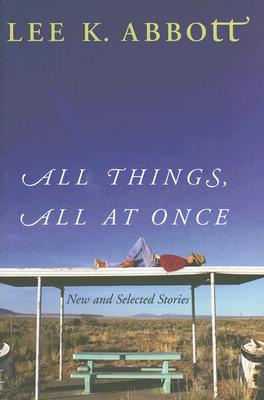
In All things, All at Once by Lee K. Abbott tries to live up to its title and doesn’t always hit the mark. Many of the stories are filled with main characters the reader never quite likes or tolerates: males cheating on wives and girlfriends; males whiskeyed up or wounded emotionally and spiritually from life, war or birth.

While the reaction to Abbott’s male characters may cause readers to feel the short story collection is uneven, the writing is good and solid. He creates a definite sense of place— mainly the Southwest, New Mexico—and time, whether the story takes place in the Sixties or now.

Likeable or not, most of Abbott’s characters feel real with their tendency to ramble, wheedle, talk and talk and talk. They talk about their fears of going crazy as in "The Way Sin is Said in Wonderland" ; about visits from extraterrestrials as in "The Talk Talked Between Worms"; about visitations from angels as in "The Human Use of Inhuman Beings"; and of course about women as in "Ninety Nights on Mercury".

Some of the short stories are connected, sharing characters, place or events freely as does real life with real people. These interconnected stories are the gems of All Things such as "The Human Use of Inhuman Beings" and "The Way Sin is Said in Wonderland". The stand-alone stories, "Dreams of Distant Lives" and "Gravity", also gleam with the characters' hard won strength and the excellence of Abbott’s creation.

Lee K. Abbott currently teaches creative writing at Ohio State University  in Columbus, Ohio. He has written six other books of short stories: The Heart Never Fits Its Wanting: Stories (1980), Love is the Crooked Thing (1986), Strangers in Paradise (1986), Dreams of Distant Lives (1990), Living After Midnight (1991), and Wet Places at Noon (1997).

Reviews of Abbott ‘s work and interviews with him appear here, here and here.

His work has often appeared in The Best American Short Stories and in publications such as Atlantic Monthly, Harper’s, The Southern Review and The North American Review.

Ultimately Abbott’s stories are, as Williams Giraldi describes, “an orgy of style, one that performs the magic trick of being at once inebriated and exact—his narrators akin to world-class drinkers who can down a fifth of Jim Beam and still stand straight".

Sunday, November 22, 2009

DATE November selection


Suspend your ideas about what makes a novel.

Heredity of Taste by Natsume Soseki is mythology and the personal musings of its narrator, which easily feels like the author's unadorned voice.

Soseki’s first and only anti-war novel opens with the mythological grandeur of a Wagnerian opera, then immediately recounts the human cost and aftermath of soldier Kosan’s death in the Russo-Japanese War of 1904–1905, narrated by Kosan’s unnamed friend.

Heredity of Taste is split into two parts. After a prologue of gods meddling into earthly affairs, Soseki presents an elegiac rumination on Kosan’s death and the victorious homecoming of his fellow soldiers at the central train station in Tokyo juxtaposed against the might-have-beens of Kosan’s life and an unknown young beauty encountered grieving at his grave.

The second section offers a somewhat hard-to-follow but fascinating dip into historical Japanese social hierarchy, western psychology, karma, ancestors and a dash of a detective-mystery story as the narrator tries to uncover the young woman’s identity.

One key to understanding Heredity is to substitute “attraction” for ‘taste” in its title. Another aid to understanding Heredity is the excellent introduction in the Tuttle Classics edition written by Stephen W. Kohl, Associate Professor at the University of Oregon. Kohl provides both historical and author context for Heredity’s setting and themes.

A fuller analytical discussion of Heredity of Taste can be found here.

Natsume Soseki is the pen name of Natsume Kinnosuke. Soseki, Japan’s Charles Dickens, is considered the foremost novelist of the Meiji period, which lasted from 1868 to 1912. He was pictured on the Japanese ¥1000 note from1984 to 2004.

Soseki’s most famous works Kokoro and Botchan are available online full-text and in English. Many of his works dealt with individual or personal desires versus group responsibilities and ties.

Although written in 1906, Heredity of Taste has a modern experimental feel. It proffers a microcosm of Japanese national character and gives a glimpse of a country on the cusp of melding the past with the future.


BSI November selection


October Light by John Gardner is not a light, easy read.

On the surface the novel centers on feuding geriatric siblings, James Paige and Sally Abbott. Younger brother James allows his down-on-her-luck widowed sister Sally to live with him, but after butting heads over politics and the morality of television, locks her in a room with a book.

Gardner uses October Light (and the novel-within-the-novel), set during the bicentennial, to comment about liberal and conservative American politics, racial bias and gender inequity as well as America’s past and future.

The novel is by turns ridiculous, laugh-aloud funny, intriguing, boring, genius and obscure--which is exactly how many critics and readers described its author, John Gardner (not to be confused with the British thriller writer, John Gardner). [Discussion questions can be found here.]

Once known as a sarcastic bad boy of literary criticism, Gardner is best known for his books On Moral Fiction and Grendel, a retelling of Beowulf from the monster’s perspective.

October Light won the 1976 National Book Critics Circle Award. Currently the National Book Critics Circle, a non-profit organization, consists of more than 900 active book reviewers who are interested in honoring quality writing and communicating with one another about common concerns.

Gardner spoke of his critique on the literary establishment (and their response) in On Moral Fiction in an interview with Don Swain and Gil Gross for Wired for Books little more than a year before his accidental death.

While it is difficult to truly recommend October Light, there are gems of excellent writing and great wit to be found in its pages. Gardner’s use of James and Sally’s intestinal complaints to symbolically illustrate the differences between liberal and conservative political thought as well as the laugh-out-loud first meeting of Father Hernandez and Sally through the bedroom door is worth the price of October Light’s numerous rambling passages.

Tuesday, October 6, 2009

B.S.I. October selection

Maps for Lost Lovers by Nadeem Aslam is a dream -- and a nightmare -- of a novel. Set in the fictional northern England town of Dasht-e-Tanhaii (Desert of Loneliness), it centers around the disappearance, and its aftermath, of two Pakistani lovers, Jugnu and Chanda. The two lovers do not make an appearance in the novel, except in the hearsay and remembrances of family members and neighbors.

Aslam immerses the reader in the vivacity of life; food, clothing, and sensuality all follow the cycles and rhythms of the seasons. Maps covers a broad spectrum of topics: racism, lepidoptery, honor killings, poetry, Pakistani culture, the travails of legal and illegal immigration and the religious tensions between Muslim, Hindu, Sikh and Christian. Yet, somehow in Maps, Aslam never lets the reader forget the beauty of the natural world and the redemption of love:

“Islam said that in order not to be unworthy of being, only one thing was required: love. And, said the True Faith, it did not even begin with humans and animals: even the trees were in love.”

However, Aslam does not gloss over the evil of life. He makes his characters human, yet reveals the brutality that such humanity is capable of. He deals with subjects like religious fundamentalism and honor killings head-on to give the reader a small glimpse of how these things affect not only that specific community but the global community. He shows how honor killings  and the threat of such a thing are not just something that happens in foreign countries.

Near the end of Maps, Aslam states the novel’s worldview:

“Nothing is an accident: it’s always someone’s fault; perhaps—but no one teaches us how to live with our mistakes. Everyone is isolated, alone with his or her anguish and guilt, and too penetrating a question can mean people are not able to face one another the next day.” Although tragedy abounds in this novel, the characters, and we the readers, are not left comfortless.

Maps serves a literary Book of Fates--“the book into which, once a year, the angels write down the destiny of every human being for the next twelve months: who’ll live, who’ll die, who’ll lose happiness, who’ll find love”--for his characters.

Aslam has written two other books: Season of the Rainbirds (1993) and The Wasted Vigil (2008).  Maps for Lost Lovers has won the Encore Award 2005 and the Kiriyama Pacific Rim Book Prize 2005.

For a critical view of Aslam’s work, read Dr. James Procter’s analysis of his work and career at the British Council Contemporary Authors website. A reading guide for Maps for Lost Lovers can be found here.

Other related reads:

Kamila Shamsie's Salt and Saffron and Kartography cover similar territory--Pakistani culture and the religious/cultural antagonism between India and Pakistan.


Thursday, October 1, 2009

D.A.T.E. October selection


What do Nietzsche, coffee table books, the Brethren of Misericordia, and obsessions have in common?

They all figure significantly in Michael Collins' Death of a Writer. Collins’ novel does not color within the lines. It is all over the place—stuffed with mystery, psychological study, character studies, art and philosophical meditations.

But caveat lector—reader beware—some parts of the novel are quite gritty. However, no more that what is called for considering the nature of the murders involved and their subsequent investigations.

Collins uncovers a fragile and sometimes sordid humanity in his characters and, by extension, us his readers.

Besides Death of a Writer, Collins has written eight books, which include a collection of short stories, a satirical meditation on Ireland’s national character and the screenplay for the movie Julia. His writing has garnered high literary attention and prestigious awards such as the 1993 New York Times Notable Book of the Year, the 2002 International IMPAC Dublin Literary Award and the shortlist for the 2000 Man Booker Prize for Fiction. Collins is also an ultra-runner and marathoner.

There are no book discussion questions specifically available for Death of a Writer. However, general book discussion questions can be found here and here.

Saturday, September 12, 2009

How do I get a copy of a book club title?

All book group selections are available, while supplies last, for $2 at the following locations:

Books Sandwiched In
Lakeland Public Library, Main Library   100 Lake Morton Drive  863-834-4280
Discussions at the E
eLibrary South Lakeland     4740 South Florida Avenue   863-838-4507

Check our online catalog for book group titles located at the public libraries in the Polk County Library Cooperative. Selections may be available in hardcover, paperback, large print, audio CD, downloadable e-audiobook and Playaway.

Classic titles may be available at Project Gutenberg  in ebook  and audiobook  formats. Project Gutenberg's nearly 100,000 volume collection is produced by thousands of volunteers.

Books for both book clubs are underwritten by the Lakeland Public Library Friends of the Library.

Discussions at the E September Selection

Discussions at the E’s September selection, Gatsby’s Girl by Caroline Preston, gives the reader an unique view of F. Scott Fitzgerald. Fitzgerald is generally studied through his own writings, through his contemporaries or even his tormented but talented wife, Zelda. However Gatsby’s Girl is told through the voice of Ginevra Perry, who is based on Fitzgerald’s first love, Ginevra King.

F. Scott Fitzgerald based several characters on King:  Daisy Buchanan from the Great Gatsby,  Isabelle Borge in This Side of Paradise, Marjorie Harvey in "Bernice Bobs Her Hair",  Judy Jones in "Winter Dreams" and a series of stories, in the early 1930s, about a spoiled Lake Forest (Illinois) girl named Josephine Perry.

Gatsby's Girl follows the 16-year-old character Ginevra Perry from her first meeting with F. Scott Fitzgerald, through their doomed brief courtship and the end of their lives. Author Caroline Preston excels at presenting a sympathetic view of a less than sympathetic main character.

Discussion questions and an interview with Caroline Preston is found at the Houghton Mifflin website.

Wednesday, September 9, 2009

Books Sandwiched In September selection

Welcome to Lakeland Public Library’s Book Groups Blog and our inaugural entry. 

Books Sandwiched In discussion group

The View from Castle Rock by Alice Munro is the September selection for Books Sandwiched In. Castle Rock is a hybrid; it is both nonfiction and fiction, yet neither. Munro calls it “a book of stories”, which is based on her ancestors’ lives in Scotland and later in Canada. She brings the stories to a close with vignettes of her own life story. 
 
Canadian Alice Munro is considered a master of the short story genre. She received the 2009 Man Booker International Prize for Castle Rock and her catalog of work. Her latest work, Too Much Happiness, was published this year. 

Read Jane Smiley’s explanation of why Munro was chosen to receive the Man Booker International Prize here. 

Read Alice Munro’s acceptance speech here. 

 The View from Castle Rock has a slow beginning but picks up speed and life as Munro moves closer in time to the present. Castle Rock initially appeals to genealogists, history buffs and lovers of Munro’s work. However with a little perseverance past the first 50 pages, the mastery Munro is hailed for comes to light.

 Book discussion questions and a book excerpt can be found at the Random House website.